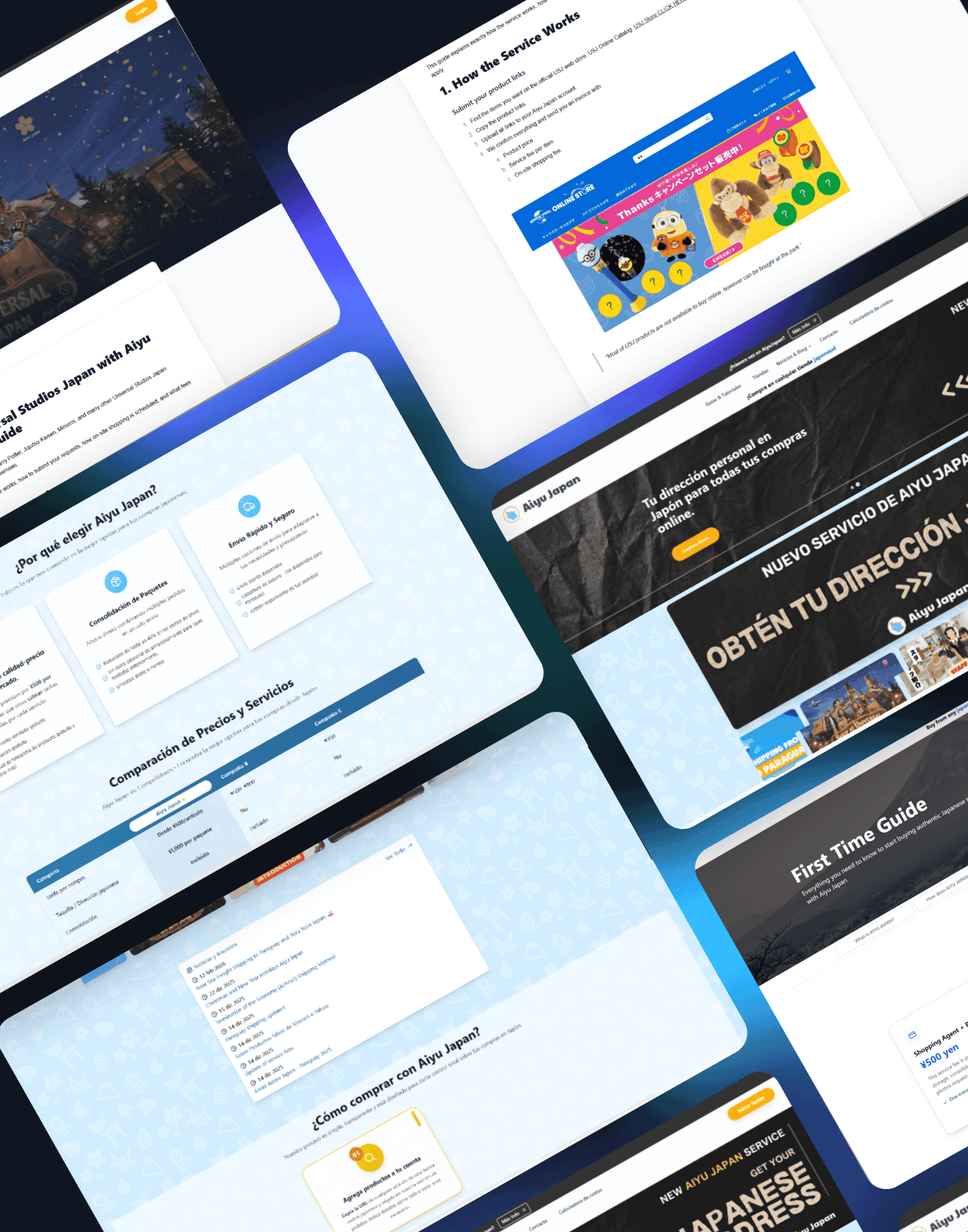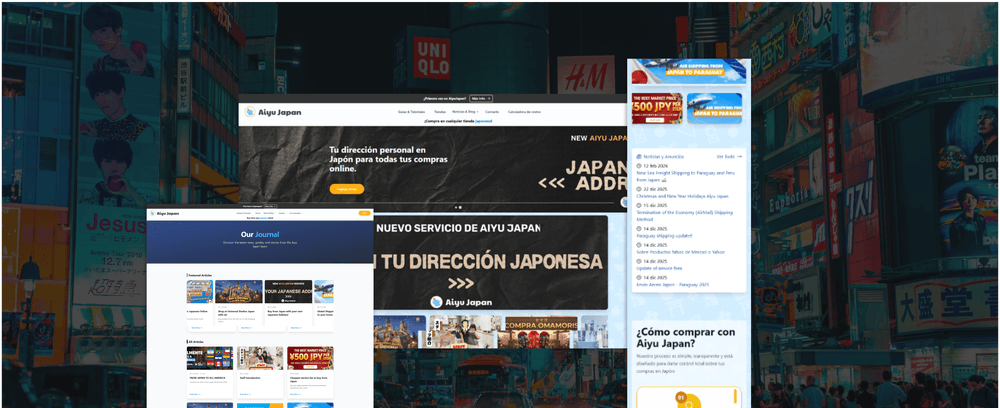
Aiyu Japan's operations team was drowning. Fragmented between fulfilling purchase requests and fielding a constant stream of confused user messages — "Where do I place an order?", "How does delivery work?", "I can't find X on the site" — the team had no breathing room. On top of that, there was no reliable space to publish service updates and news; content would get buried in social media feeds, never reaching the users who needed it most. To make matters more complex, requests were coming in from non-Spanish-speaking countries, and the language barrier was turning away potential customers before they even got started.
Why User Experience Matters
Before writing a single line of code, I needed to understand the experience firsthand. I invited friends and family to navigate the existing platform and tell me whether they understood the business or how to place an order. The feedback was consistent: "I don't get what this is about," "The registration button was hidden," "I couldn't find shipping info for my country." This confirmed what the team already felt — the user experience was the bottleneck, and a CMS for managing updates was long overdue.
Creating Structure
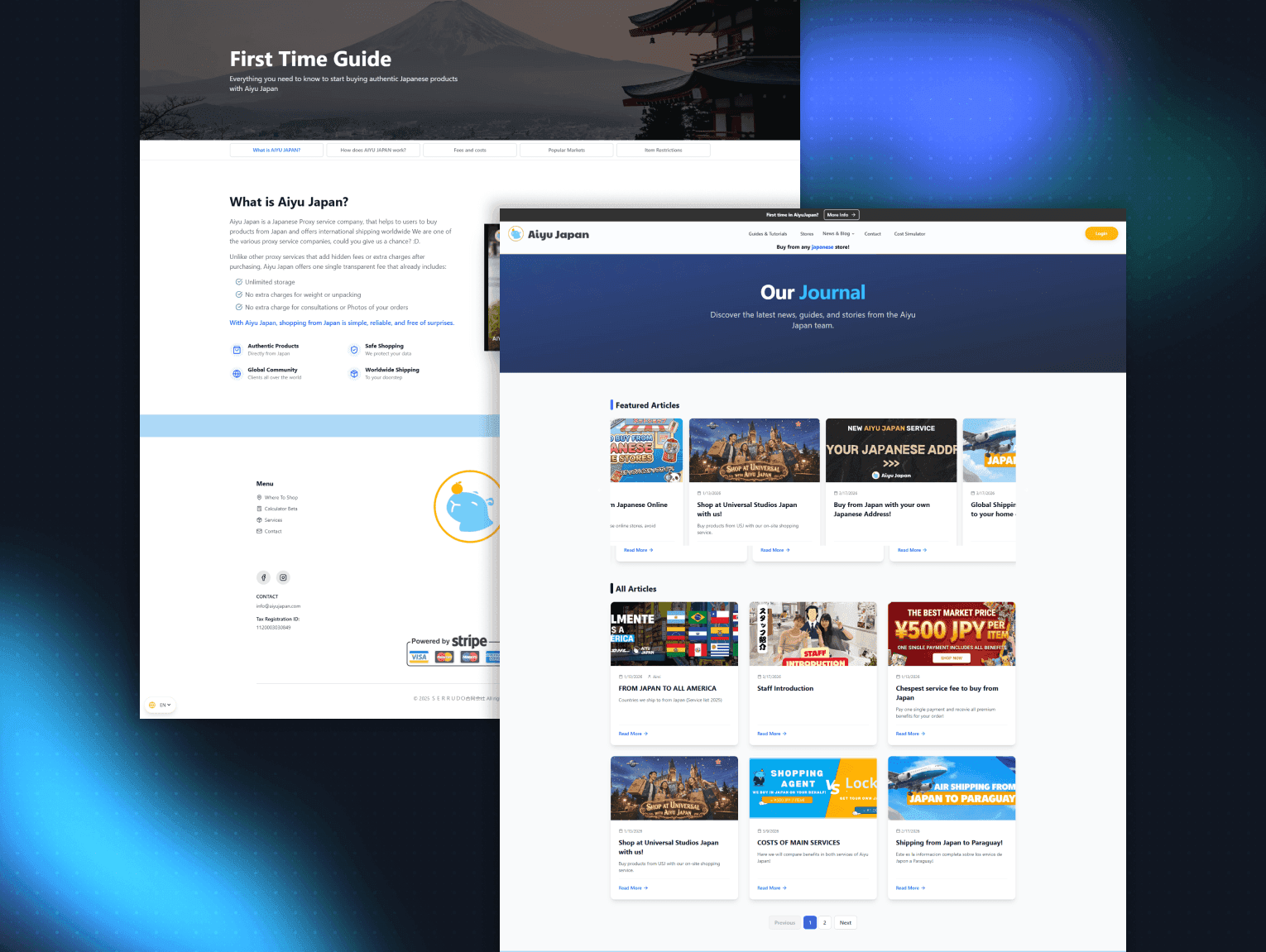
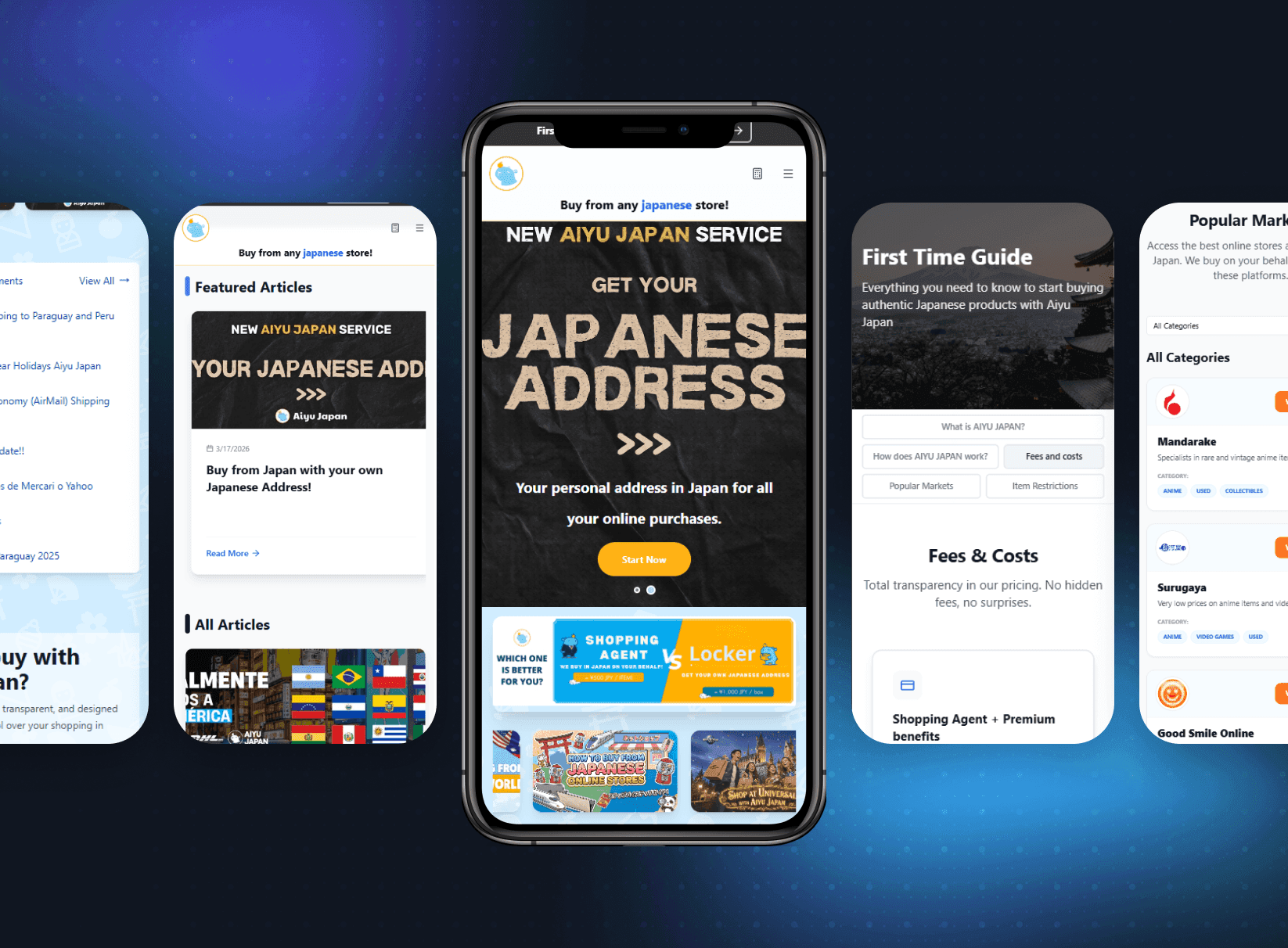
I researched competitors in the proxy-shopping space and quickly discovered that clarity is their greatest challenge. These platforms juggle affiliate stores, multi-country shipping, currency conversion, business model explanations, and import regulations — all at once. The solution was a clean, minimalist interface with intuitive navigation and full mobile responsiveness, since the majority of users were placing orders from their phones.
Impact of a user oriented design
Operational messages dropped by 70% — primarily inquiries about shipping and merchandise that the redesigned platform now answered proactively. With multilingual support built into the platform, 1 in 3 requests now comes from non-Spanish-speaking countries, opening a market that had previously been blocked by language alone.